Paver Sealing in Cape Coral, FL
Sealing is the difference between pavers that look ten years old at ten years, and pavers that look ten years old at four. In Cape Coral it also decides how long the joints hold before the sand washes out.
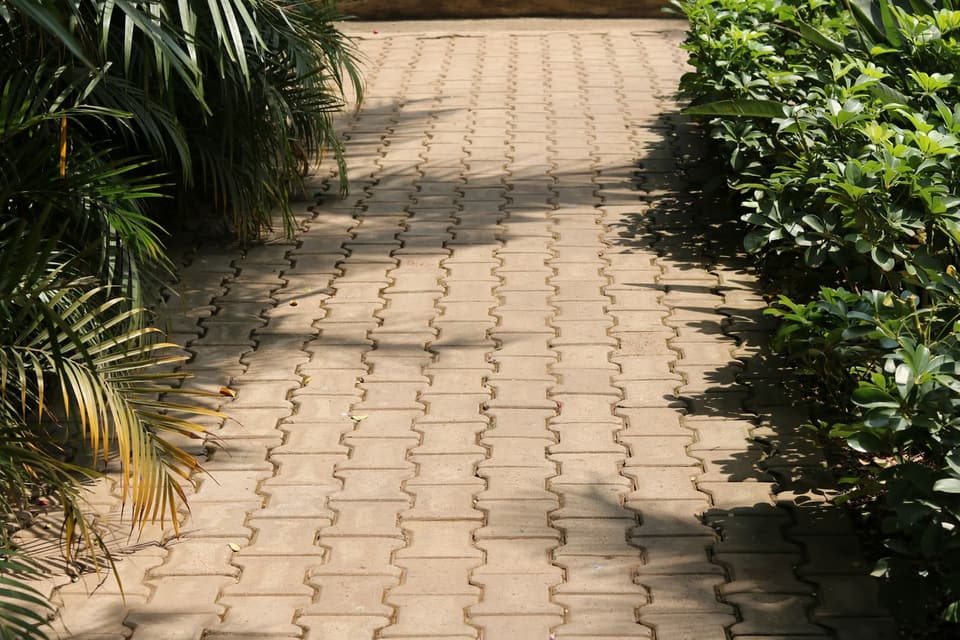
What the job actually involves
A proper seal is mostly the work before the sealer. The pavers are cleaned, usually surface-cleaned rather than wanded, because a spinning wand at close range strips joint sand and etches the paver face. Weeds and any moss on the north side of the house come out. Oil spots get treated separately, because sealer over an oil stain locks the stain in permanently. Then the joints are re-sanded, and only then does anything get sealed.
Why the joints matter more here
Cape Coral sits on sand, close to salt water, with a high water table. Three things follow. Joint sand washes out faster than it does inland, because afternoon storms move a lot of water across a driveway in a short time. Salt in the air accelerates the breakdown at the joint edge. And a driveway that has lost its joint sand starts to shift. Pavers rock underfoot, then they sit unevenly, then you are paying for a re-lay rather than a seal. Re-sanding is the part of this job that actually protects the investment; the shine is a side effect.
Wet look, satin, or matte
Wet-look sealers darken the paver and leave a gloss. They show water spots and they show wear patterns where cars turn. Satin is the middle. Matte leaves the colour close to natural and hides imperfections best. On a west-facing Cape Coral driveway taking full afternoon sun, matte and satin hold up visibly better. Gloss on that exposure tends to look tired within a season or two. Any of them can be applied badly: too much sealer on a damp paver is what causes the white haze people ask about.
How often
Every two to three years is the usual guidance for Florida, and Cape Coral sits at the shorter end of that because of the salt and the rain. Closer to the water (Matlacha, Pine Island, the canal-front streets in the southwest Cape), plan on the shorter interval. A driveway that has never been sealed is not a lost cause, but it will need more cleaning and more sand before it takes sealer properly, and that changes the price.
What actually happens on the day
Worth knowing the sequence, because the order is what separates a seal that lasts from one that looks good for a season. The surface is cleaned first, and on a driveway that usually means a surface cleaner rather than a wand. A spinning wand held close strips joint sand and etches the paver face, and both of those cost you more than the dirt did. Weeds and moss come out by hand or with a treatment; anything organic has to be killed rather than just blasted off, or it returns from the root. Oil spots get treated separately and before anything else, because sealer over an oil stain makes the stain permanent. Then the surface dries. This is the step people underestimate: pavers hold water, and a driveway that looks dry on top can still be damp in the joints. In the dry season that is usually overnight. In summer it may not happen at all, which is the real reason the season matters. Joints are re-sanded next, swept in fully and compacted, then watered in if the sand is polymeric. Only then does sealer go on, usually in two thin coats rather than one heavy one. Two thin coats cure properly. One heavy coat is what traps moisture and produces the white haze.
How long it lasts, honestly
Two to three years on a Cape Coral driveway, shorter near open water, longer on a shaded inland one. Anyone quoting five years is either using language loosely or selling something. What actually fails first is almost never the sealer film. It is the joint sand underneath it, which is why re-sanding is the part of this job that protects the driveway and sealing is the part that protects the colour. A driveway that gets re-sanded on schedule and sealed slightly late is in far better condition than one sealed on time over empty joints.
When it can be done
Pavers have to be dry, and the sealer has to cure without getting rained on. From roughly June to September that is difficult to guarantee in Cape Coral. Afternoon storms are near-daily and the humidity slows curing even on a dry day. October through April is the working season. If you are reading this in the summer, the sensible move is to book the cleaning and re-sanding now and have the seal scheduled for the first reliable dry stretch.
Get on the fall schedule now. Call for a free assessment. We will look at the driveway, tell you whether it needs cleaning and re-sanding first, and book the seal for the first dry stretch rather than leaving you to guess.
| Finish | Look | Holds up | Best for |
|---|---|---|---|
| Wet look | Darkens the paver, high gloss | Shows water spots and tyre scuffs; tires visibly on west-facing driveways | Shaded driveways, owners who want the colour deepened |
| Satin | Slight sheen, colour lifted a little | The middle option on every count | Most Cape Coral driveways, if you are unsure |
| Matte | Close to the natural paver colour | Hides imperfections best and ages most evenly in full sun | West-facing driveways, pool decks, HOA-restricted communities |
Sealer sits on top of all of this. It protects colour and it slows the joint sand washing out, but it cannot fill a joint that has already emptied. That is why a proper seal starts with re-sanding and why a quote that omits sand is quoting a different, smaller job.
Where we work in Cape Coral
- Yacht ClubSoutheast Capeone of the oldest parts of the city, so a lot of the paver work here is on driveways laid two decades ago
- Cape HarbourSouthwest Capedeep-water marina community; direct Gulf access means salt exposure at the high end
- Tarpon PointSouthwest Caperesort-style grounds where paver decks and walkways get held to a high standard
- PelicanSouthwest Capeestablished, heavily canal-fronted, and a mix of original and replaced driveways
- SandovalSouthwest Capegated and master-planned, so surfaces tend to be newer and sealing is preventative
- Burnt Store corridorNorthwest Capenewer construction north along Burnt Store Road; efflorescence on young pavers is common here
ZIP codes served33904 · 33909 · 33910 · 33914 · 33915 · 33990 · 33991 · 33993
Common questions
What does paver sealing cost in Cape Coral?
Local companies generally quote somewhere between $1.50 and $3.50 per square foot for sealing in Southwest Florida, and the spread is mostly about condition rather than the sealer itself. A maintained driveway sits near the bottom; one that has never been sealed, has heavy organic growth or needs significant re-sanding sits near the top. We do not set prices; the company that quotes you does. But a number well outside that range is worth asking about in either direction.
How often should pavers be sealed here?
Every two to three years is the general Florida guidance, and Cape Coral sits at the shorter end of it. Salt in the air and near-daily summer storms both shorten the interval compared with inland Florida, and a west-facing driveway in full afternoon sun will show wear before a shaded one does.
Do canal-front and Gulf-access homes need it more often?
Generally yes. Cape Coral has over 400 miles of canals, so salt-laden air reaches most of the city rather than only the waterfront row, but exposure is still worst closest to open water. Cape Harbour, Tarpon Point and the southwest Cape canal streets tend to run on the shorter end of the interval, and Matlacha and Pine Island shorter still.
How long before I can drive on it?
Foot traffic is usually a few hours; vehicles are typically 24 to 48 hours depending on the sealer and the humidity that day. Ask before the crew leaves.
Can pavers be sealed in the summer?
They can be, but it is the wrong time to do it in Southwest Florida. Sealer needs dry pavers and a dry cure, and between June and September afternoon storms make both hard to guarantee. October through April is the working season. If you call in summer the sensible plan is usually cleaning and re-sanding now, with the seal booked for the first reliable dry stretch, which also tends to get you a better slot.
Will sealing fix pavers that have sunk?
No. Sinking is a base problem and sealer sits on the surface. Those areas need lifting and re-setting first. See paver repair. Sealing a surface that is still moving is spending money on the symptom.
My pavers went white after the last seal. Can that be fixed?
Usually. Hazing is generally trapped moisture or over-application, and it often needs a solvent strip and a re-seal rather than another coat on top. It is worth distinguishing from efflorescence, which is mineral salt rising out of the paver itself and is common on newer installations north along the Burnt Store corridor.
Is polymeric sand worth the extra?
On Cape Coral driveways, usually. It costs more than plain silica but it binds, so it holds far better on a slope and through the storms that move a lot of water across a driveway quickly. Ask which sand is being quoted. If the estimate does not say, it is generally not polymeric.
Does sealing make a pool deck slippery?
A wet-look or gloss sealer can, which matters around a pool and inside a screen enclosure. Matte and satin finishes, or a sealer with a slip-resistant additive, are the usual answer. If a quote recommends wet-look for a pool deck without mentioning slip resistance at all, ask the question directly.
Is there a warranty?
That is between you and the company that does the work, and it varies. Some local companies offer a workmanship warranty of around a year. We are a referral service and do not perform the work, so we cannot warrant it. Ask for the terms in writing before booking, and ask specifically what is excluded.
Also in Cape Coral
- Paver Cleaning and Re-Sanding in Cape Coral
- Paver Repair and Re-Leveling in Cape Coral
- Brick Paver Installation in Cape Coral
- Pool Deck and Lanai Paver Sealing in Cape Coral
Also serving
Paver Sealing is available beyond Cape Coral, across North Fort Myers , Fort Myers , Matlacha & Pine Island and Burnt Store Corridor .
Get a quote for paver sealing
Tell us what you need and a local paver crew will take a look, usually within a few days. Answered Mon–Sat, 8am–6pm · after hours we call back the same day Or call (239) 439-6827 — most people get an answer faster that way.